
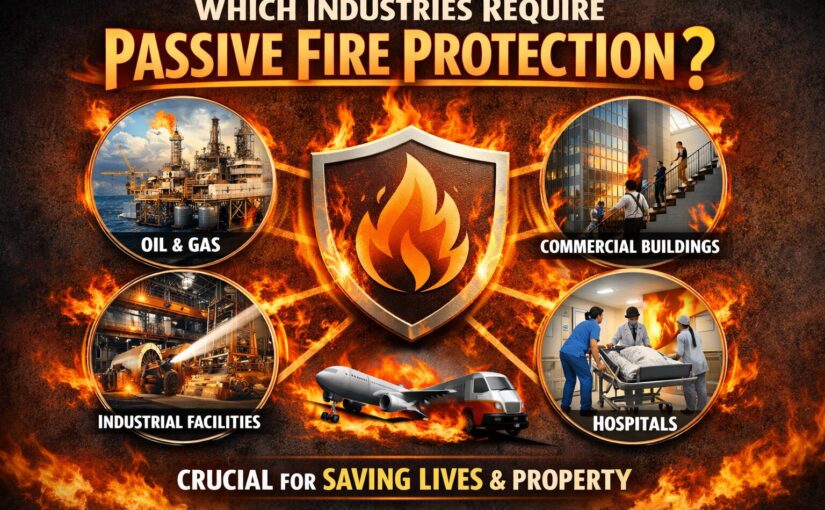
Once a fire spreads, it cannot be stopped if not controlled in time. Thus, fire safety is mandatory for organizations. Fire safety is important for every industry. However, some sectors face higher risk due to hazardous materials, complicated infrastructure, valuable assets or high occupant density. While fire alarms, sprinklers, and extinguishers help detect and suppress fire, Passive Fire Protection works in the background, containing the fire, slowing its spread and protecting lives and property.
Thus, passive fire protection in commercial construction, hospitals, oil refineries and more is the need of the hour to prevent catastrophic damage.
What is Passive Fire Protection?
Passive Fire Protection refers to a collection of fire-resistant building materials, structural systems, and compartmentation methods designed to contain the fire and smoke without any need to activate it.
This protection type is permanently integrated into the building’s structure. When the fire erupts in the building, the passive fire protection begins working immediately when exposed to fire.
The system provides valuable evacuation time, protects the structure’s integrity and helps emergency responders control fire more effectively.
What are the common Passive Fire Protection Systems?
- Fire–Resistant Walls
- Fire Doors
- Fire-Rated Partitions
- Intumescent Coatings
- Penetration Sealing
- Fire Stopping Systems
- Structural Steel Protection
- Fire Dampers
- Fire Resistant Insulation
Which Industries Require Passive Fire Protection?
- Commercial Construction: Commercial buildings such as office complexes, shopping malls, restaurants, educational institutions and mixed-use developments accommodate many occupants daily. To prevent the spread of flames and smoke rapidly between floors and occupied areas, fire compartmentation through a passive fire protection system is important. The passive fire protection system includes fire-rated walls and partitions, fire doors, fire-resistant ceilings, structural steel fireproofing and fire stopping around electrical and plumbing penetrations.
With this system in place, one can be assured of the safety of the occupancy and simple evacuation. The system also helps the buildings adhere to the local fire codes and global fire safety standards.
- Oil and Gas Industry: The oil and gas sector involves flammable hydrocarbons, combustible gases, high operating temperatures, and pressurized equipment. Thus, this sector presents the greatest fire risks, and oil and gas passive fire protection is essential. Refineries, LNG terminals, petrochemical plants, offshore drilling platforms, storage terminals and pipeline facilities require passive fire protection. The protection includes fireproof coatings, hydrocarbon-rated fireproofing systems, blast-resistant barriers and structural steel protection, helping maintain structural stability during hydrocarbon fires, reducing ruinous failures and ensuring safe evacuation.
- Marine and Offshore: Ships, offshore platforms, floating production units and marine terminals operate in isolated environments where emergency response may take longer than at onshore facilities. Passive fire protection is widely used for engine rooms, accommodation modules, escape corridors and bulkheads. Marine and offshore fire protection helps contain fires within the designated compartments while maintaining vessel integrity and protecting crew members.
- Aviation Industry: Cargo terminals, fuel storage areas, hangars, airports and aircraft maintenance require robust fire protection because of high passenger traffic and aviation fuel hazards. Aviation industry fire safety ensures containment of smoke, structural fire resistance, critical evacuation routes, smoke containment and fire compartmentation. These systems reduce the fire spread and protect essential airport operations while ensuring compliance with the strict aviation safety norms.
- Data Centers: Modern data centers are equipped with mission-critical servers, cloud infrastructure, healthcare records, financial systems and enterprise applications, where even a few minutes of downtime can result in huge financial losses. Data center passive fire protection helps safeguard server rooms, cable trays, electrical rooms, battery storage, network infrastructure and UPS rooms. Fire stopping around cable penetrations, fire-rated walls, structural protection and compartmentation prevent localized fires from spreading throughout the facility, protecting valuable IT infrastructure and doing away with business disruptions.
- Healthcare Facilities: Hospitals operate 24/7 and accommodate patients who may not be able to evacuate independently during emergencies. Healthcare facility fire safety requirements mandate passive fire protection in patient wards, operating theatres, medical gas storage, laboratories, ICUs and emergency escape routes. The fire resistance ensures horizontal evacuation strategies, helping the healthcare staff relocate the patients safely without immediate evacuation of the building.
- Industries: Automotive, food processing, pharmaceuticals, electronics, warehousing, logistics and chemical manufacturing contain machinery, electrical systems, chemicals, warehouses and production lines that increase the risk of fire. Industrial passive fire protection safeguards production facilities by protecting structural steel, sealing service penetrations and reducing business interruptions after fire incidents.
Case Study
A data center in Gurgaon experienced an electrical fault within the power distribution room. This resulted in localized fire and heavy smoke generation. The facility was equipped with mission-critical servers supporting financial transactions across multiple regions. The main concern was to prevent the fire from spreading into the adjacent server rooms, where even small damage could have caused extensive downtime and millions in operational losses.
The center had implemented a 360˚ passive fire protection strategy that included fire stopping around the cable penetrations, fire-rated compartment walls, fire-resistant doors, intumescent coatings on structural steel and smoke-resistant sealing systems.
These systems contained the fire spread, preventing flames and smoke from spreading to important IT spaces. The result of the passive fire protection system was-
- Fire remained confined to one compartment
- Maintenance of structural integrity during the fire outage
- Adjacent server rooms continued operating with minimal interruption
- Emergency responders safely extinguished fire
- Business operations resumed quickly with reduced financial impact.
This case study shows how investing in passive fire protection not only protects lives but also preserves critical infrastructure and business continuity.
Every industry has unique fire safety challenges; however, one requirement remains the same – protection of people, property and business continuity. Invest in professionally designed passive fire protection systems to ensure compliance with fire safety guidelines while reducing the impact of fire emergencies.
FAQs
- What is the difference between passive and active fire protection?
Passive fire protection contains fire through fire-resistant building elements without activation, while active fire protection responds when a fire occurs. Work with JPSC Solutions for tailored fire protection solutions. - How long can passive fire protection resist fire?
Passive fire protection solutions can provide fire resistance ranging from half an hour to over four hours, allowing enough time for evacuation and emergency response. - How often should a passive fire protection system be inspected?
Passive Fire Protection should be inspected during installation, after modifications and through periodic maintenance programs to ensure integrity, performance and compliance. JPSC Solutions offers regular inspections.
About the Author
JPSC Solutions, established in 2014, is driven by the vision to deliver world-class passive and active fire protection solutions across India. The brand is committed to delivering internationally certified fire protection protocols delivering solutions that adhere to global safety standards.
The brand specializes in firestop and fireproofing systems, providing customers with access to proven and high-performance fire protection technologies. Backed by the team of engineers and firestop specialists, JPSC Solutions ensures every project is executed with precision, technical expertise and strict adherence to global fire safety standards.