
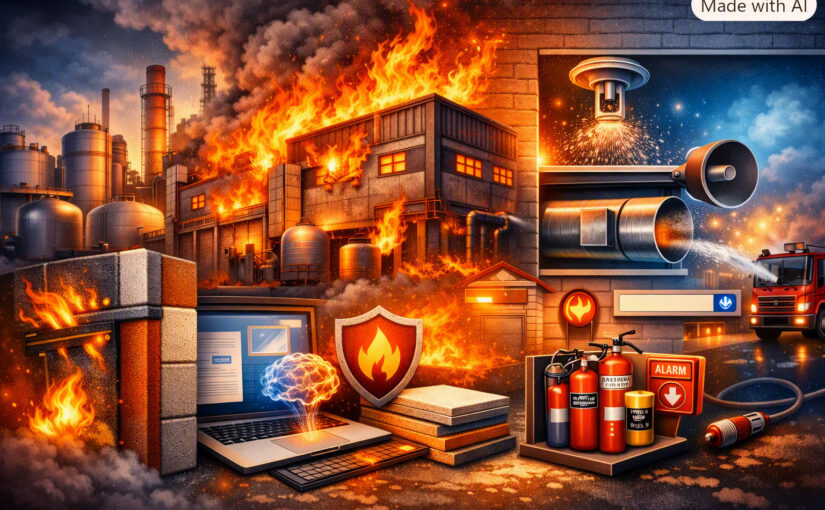
Industrial facilities such as warehouses, manufacturing plants, logistics centers, chemical processing units, and factories are more vulnerable to fire than other commercial buildings. A small spark from faulty electrical equipment, flammable liquids, overheated machinery, combustible dust or welding operations can develop into a major fire emergency. As soon as the fire breaks out, it spreads fast in open spaces, combustible materials, interconnected production areas and inadequate compartmentation, allowing flames, smoke and heat to spread rapidly, causing huge damage, business interruption, financial losses and risks to human life. Here comes the role of passive fire protection to play.
What is Passive Fire Protection?
Passive Fire Protection is a built-in fire safety system designed to contain fire and smoke, protect structural elements and slow fire spread without requiring manual interference or automatic activation. It includes-
- Fire-resistant walls
- Fire Doors
- Fire-rated sealants
- Fire Stopping Systems
- Fire barriers
- Fireproof coatings
- Compartmentation Solutions
The above solutions remain effective 24/7. By limiting the movement of flames, smoke and heat, the passive fire protection helps preserve the structural integrity of the building, supports safe evacuation and gives firefighters valuable time to control the incident.
Why does fire spread so quickly in Industrial buildings?
Industrial buildings are designed for efficient production and storage, but are at high risk of catching fire. Heavy machinery, large open floor space, high ceilings, electrical installations, cable trays, ventilation ducts and interconnected service openings create many pathways for fire and smoke to travel.
The heat rises via penetrations that are not sealed and smoke spreads through HVAC systems and ceiling voids, minimizing visibility and increasing danger for occupants. Without proper fire compartmentation and passive fire protection measures, even localized fire can affect many sections of the facility, leading to huge damage and prolonged operational downtime.
How Does Passive Fire Protection Stop Fire from Spreading?
- Create Fire Compartments: Passive fire protection divides an industrial building into separate fire-resistant compartments using fire-rated walls, floors, ceilings and barriers. They do not allow the flames to spread across the entire facility; they confine the fire to its point of origin for a certain fire-resistance period. This will reduce property damage while giving emergency responders added time to control the situation.
- Seal Service Penetrations and Hidden Openings: Industrial buildings contain many cable trays, electrical conduits, plumbing pipes, ducts and mechanical services passing through walls and floors. If these penetrations remain unsealed, they become direct routes for fire and smoke. The fire stopping systems use certified sealants, collars, wraps and fire-resistant materials to restore fire ratings of walls and floors, preventing flames and toxic smoke from spreading into nearby areas.
- Protects the structure from Collapse: Exposed to high temperatures during fire, steel loses its strength. The structural steel can begin weakening long before flames consume the buildings. Passive fire protection systems such as intumescent coatings, fireproof boards, and spray-applied fire-resistant materials insulate structural members, helping them maintain load-bearing capacity for longer. This added protection supports firefighter operations and provides the occupants with more time to evacuate safely during industrial fire hazards.
- Reduce smoke movement: Smoke causes more damage than flames in many fire incidents because it reduces visibility and releases toxic gases. Passive fire barriers, smoke seals, compartment walls and fire-rated doors help limit smoke migration in industrial buildings. The passive fire protection keeps the escape routes clearer for longer, ensuring safe evacuation and reducing exposure to harmful smoke conditions.
- Reduce Business downtime: Apart from protecting lives, passive fire protection ensures business continuity and reduces financial loss. When the fire is contained in limited areas, inventory, equipment, production lines and key infrastructure in unaffected sections remain protected. This reduces repair costs, shortens recovery time, reduces insurance claims, and allows business to resume operations sooner after a fire outage.
Case Study
A medium-sized manufacturing facility in Delhi experienced an electrical fault in one of its production units. This ignited nearby combustible materials. The building has been designed to combat industrial fire risks. With fire-rated compartment walls, fire stopping around service penetrations, fire-resistant doors and protected structural steel, the fire was contained in the compartment walls. This prevented the flames from reaching the warehouse where raw materials and finished products were stored. The fire stopping systems prevented smoke and heat from spreading via cable trays and pipe openings into adjacent departments. The passive fire-resistant measures maintained the stability of the building long enough for employees to evacuate safely and for firefighters to extinguish the fire without structural collapse.
There was no need for a complete shutdown, and most production was resumed after localized repairs instead of requiring full building reconstruction. The insurance losses were reduced to a great extent, business interruption was reduced, and organization preserved both employee safety and operational continuity. This case study shows how investing in passive fire protection can reduce the impact of industrial fires in case of an unprecedented fire breakout.
Industrial fire safety is the need of the hour. Fire emergencies cannot always be prevented, but their impact can be reduced greatly with professionally designed passive fire protection systems. Investing in certified passive fire protection solutions can help protect occupants, assets, equipment and business operations while supporting regulatory compliance and long-term safety. Work with good passive fire protection experts and get customized solutions that help safeguard your industrial building against the devastating effects of fire.
FAQs
- Why do industrial fires spread quickly?
Industrial fires spread quickly because large open spaces, combustible materials and unprotected service openings allow flames, heat, and smoke to move rapidly throughout the building. JPSC Solutions offers passive fire protection measures to slow the fire spread. - What are the causes of industrial fire spread?
Flammable liquids, hot work, machinery overheating, electrical faults and inadequate passive fire protection are some of the causes of industrial fire spread. - Why should businesses invest in JPSC Solutions certified passive fire protection systems?
Certified passive fire protection improves life safety, supports regulatory compliance, protects valuable assets, preserves structural integrity and strengthens business continuity during fire emergencies.
About the Author
JPSC Solutions, established in 2014, is a trusted service provider of passive and active fire protection solutions. Managed by experienced professionals, the brand delivers globally certified fire protection products and solutions that meet world safety standards. The brand offers on-site support, fire audits, technical expertise and certified firestop engineers to help clients achieve reliable fire protection and regulatory compliance.