
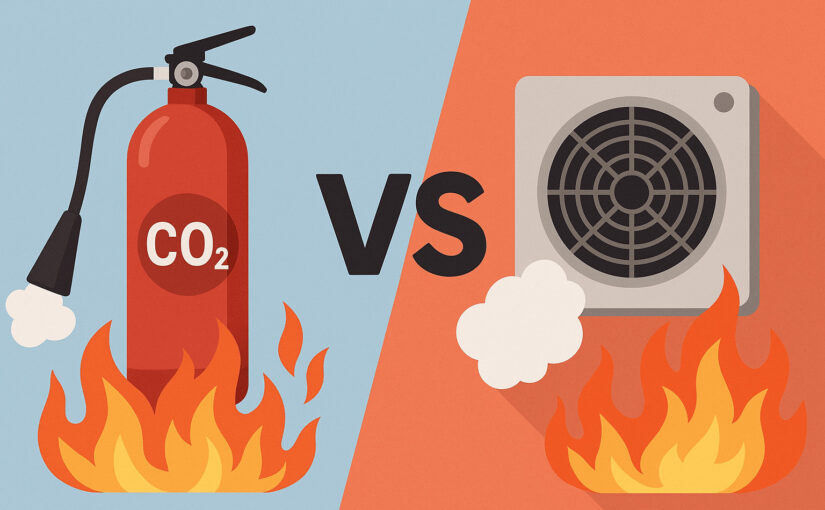
Fire accidents can cause huge losses not only of property but also of lives. Fire suppression systems are a lifesaver. However; when choosing a good system, one must consider three pillars, including safety, environmental impact and cost-efficiency.
What is a Fire Suppression System?
A fire suppression system is a specially designed system that automatically detects and extinguishes fires using various extinguishing agents. They are important in protecting lives, property and equipment in both residential and commercial settings.
The system responds quickly to control or extinguish fires before they spread, often without the need for human intervention.
Who are the two leading contenders in Fire Suppression System?
CO₂ (carbon Dioxide) and DSPA (Dry Sprinkler Powder Aerosol) Systems are the two leading contenders. Both have a proven record in fire control, but they vary significantly in terms of how they function and perform across different criteria. Both are rated as safer fire suppression systems.
What is CO₂ Fire Suppression?
Co2 fire suppression systems use carbon dioxide gas to extinguish fires by displacing oxygen, which is essential for combustion. They are commonly used in electrical rooms, engine compartments, industrial settings and data centres.
What is the DSPA System?
Dry Sprinkler Powder Aerosol (DSPA system is an aerosol-based fire suppression system that releases a fine potassium-based dry chemical into the air. This chemical interrupts the chemical reaction of the fire rather than removing oxygen. The process makes it effective for enclosed environments without harming people or sensitive equipment.
CO₂ v/s DSPA Fire Suppression- Which System Possesses Less Risk
DSPA is a clear winner as they are safer, especially for occupied spaces or scenarios where human presence is likely during activation.
CO₂ system safety concerns are-
- Oxygen Displacement: The CO₂ fire suppression system works by removing oxygen from the air. This makes it a dangerous process for humans and animals in the area during discharge.
- Entry Restrictions: After use, areas need to be ventilated and checked thoroughly before re-entry is allowed.
- Warning systems required: There is a risk of asphyxiation, and CO₂ systems must be installed with alarms and delay timers to allow evacuation.
Why is the DSPA Fire Suppression System Safe?
- Non-Toxic and Human Safety: DSPA aerosols are safe for occupied areas. They do not displace oxygen, making them ideal for environments with people or sensitive electronics.
- No High Pressure Release: The system discharges with low pressure, reducing the risk of structural or equipment damage during deployment.
- Minimal Visibility Impact: Unlike traditional extinguishers, the aerosol remains suspended for a short duration and settles slowly, maintaining visibility during assessment or escape.
CO₂ or DSPA – Which of the two is Eco-Friendly Fire Suppression Systems
CO₂- Causes Adverse Effects on the Environment
- Though a naturally occurring gas, its release in concentrated amounts contributes to greenhouse gas emissions.
- Carbon dioxide does not deplete the ozone layer, but large-scale use can still harm the environment if not recycled properly.
- Re-pressurizing or refilling cylinders is an energy-intensive process.
DSPA System- Greener and Sustainable Option
- The agents are ozone-friendly and have negligible global warming potential.
- Unlike traditional water-based sprinklers, DSPA systems avoid unwanted water usage and do not create runoff.
- The remains from this system are minimal and non-corrosive, ensuring easy cleaning and less damage to the environment. Thus, it is rated as one of the best green fire suppression solutions.
DSPA V/s CO₂ System Comparison
| Parameter | CO₂ Systems | DSPA Systems |
| Human Safety | Causes suffocation | Safe in occupied areas |
| Oxygen Displacement | Yes | No |
| Ozone-Friendly | Yes | Yes |
| Global Warming | Moderate | Negligible |
| Cost of Installation | High | Moderate |
| Maintenance | Frequent | Minimal |
| Cleanup After Use | Ventilation | Easy Cleaning |
| Lifespan | 5-10 Years | More than a Decade |
| Use Ideally in | Unoccupied Areas | Occupied and Unoccupied Areas |
The Most Cost-Effective Fire Suppression Systems
CO₂ System-
- They have a high installation cost. They need pressurized cylinders, discharge nozzles and safety measures that increase setup costs.
- The systems need to be inspected regularly; refilling, and consistent safety tests make their maintenance costly.
- After activation, the areas need to be ventilated and downtime, adding to downtime and indirect costs for businesses.
DSPA System Financial Benefits
- Their cost of installation is low. The generators are modular, compact and easier to install. There is no need for any pressurised piping system.
- These systems are preferred for their low or minimal maintenance. This reduces their long-term operational costs.
- The DSPA units can last more than a decade without replacement or recharge.
- As the system is self-contained and clean, there is quick activation and minimal downtime. The business operations can resume faster after a fire incident.
The lifetime cost of owning a DSPA Fire Suppression System is significantly lower due to reduced maintenance and quicker recovery time.
CO₂ v/s DSPA Fire Suppression System – Which is Better?
The CO₂ system is the best option if the protected area is unoccupied during discharge. One needs a very fast suppression of high-energy fires; CO₂ is a preferred option.
The DSPA system is a go-to option if the protected area is frequently occupied. Also, if one wants a sustainable, low-maintenance and scalable system, it is a good option. Also, for enclosed environments like engine rooms, vehicles or warehouses, the DSPA fire suppression system is an apt choice.
However, DSPA fire suppression systems outperform CO₂ systems in safety, environment-friendliness and cost-effectiveness. While CO₂ systems have their place in specific industrial or enclosed applications where human presence is limited, DSPA offer lower risk, versatile and eco-friendly performance.
For a smarter, safer, greener and cost-effective choice, DSPA Fire Suppression System is a perfect choice.
Work with a certified fire safety expert who guides you with the best fire suppression system for your facility.
FAQs
- What are fire suppression systems without water?
The fire suppression systems without water use agents like gas, foam or dry chemicals to extinguish fires without causing water damage. JPSC Solutions offers a variety of fire suppression systems in sync with your requirements. - What is a CO₂ fire suppression system?
A CO₂ fire suppression system uses carbon dioxide gas to extinguish fires by displacing oxygen and reducing the heat below combustion levels. - Which is better, CO₂ or DSPA Fire Suppression System?
DSPA is better than CO₂ for safety, sustainability and affordability, especially in occupied or sensitive areas. JPSC Solutions offers the premium DSPA Fire suppression system according to your needs.