
Wooden doors, surfaces and ceilings add warmth and beauty to your home or office. But wood is highly combustible.
Here comes the role of the best fire-resistant paint for wooden doors and surfaces. Applying fire-resistant paint to wood is one of the most effective ways to improve fire safety without compromising the aesthetics of the interior.
What is Fire-Resistant Paint?
Fire-resistant paint is a specialised protective coating designed to slow down the spread of fire and reduce heat damage to surfaces such as steel, wood, concrete, and walls.
When exposed to high temperatures, this paint forms an insulating char or intumescent layer that expands and shields the underlying material from flames, helping to maintain structural integrity for a longer time.
Widely used in residential, commercial and industrial buildings, fire-resistant paint increases fire safety, providing enough time for evacuation, supporting compliance with fire regulations without altering the appearance of the surface.
Importance of Fire-Resistant Paint for Wooden Surfaces
Applying fire-retardant paint on interior and exterior wood surfaces slows down the fire spread, reducing heat release.
When exposed to high temperatures, the coating expands and forms a protective shield over the wood.
Benefits of Fire-Resistant Paint for Wooden Surfaces
- Delays ignition and flame spread
- It provides extra time for evacuation
- It helps meet fire safety norms
- Preserves the natural look of wood.
Types of Fire-Resistant Paint for Wood
- Intumescent Fire-Resistant Paint
- Fire Retardant Coatings
- Clear Fire Resistant Coatings
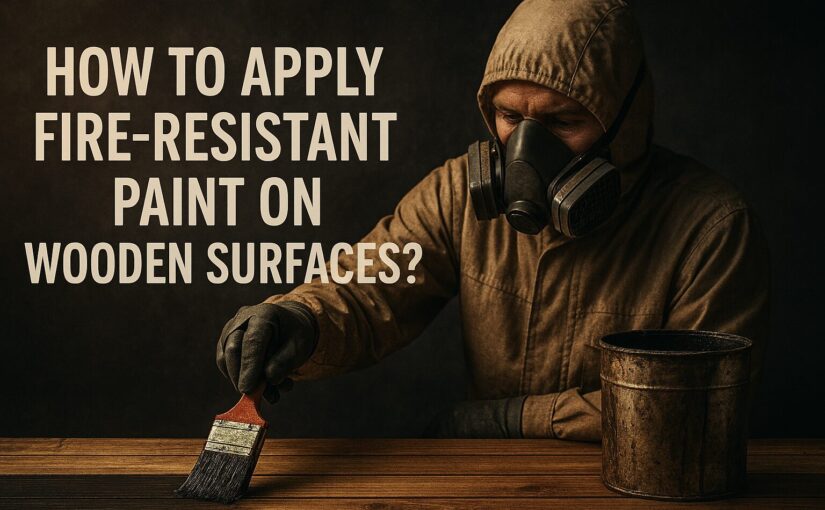
How to apply fire-resistant paint on wooden surfaces?
- Surface Preparation: This is the most important step in the fire-resistant paint application process for wood surfaces. Proper surface preparation ensures strong adhesion and effective fire protection. It involves cleaning the wooden surface to remove dust, grease, oil or old paint. Then sand the surface, creating a smooth and even base. A poorly prepared surface can reduce fire resistance performance significantly.
- Apply Primer: The next step is to apply primer. Some fire-resistant paints require a compatible primer, while others can be directly applied to wood. When applying primer, check the instructions of the manufacturer. Apply primer evenly using a brush or roller. Allow sufficient drying time before applying the fire-resistant paint. Correct primer improves adhesion and durability.
- Mixing the fire-resistant paint: Fire-resistant paints contain special compounds that settle at the bottom. Stir the paint thoroughly using a clean stirrer. Only if the manufacturer has specified diluting the paint. Make sure the consistency is uniform before application.
- Application of paint on wood: There are various methods of applying fire-resistant coating for wooden ceilings, doors or other surfaces. These include brush application, roller application and the spray application.
- Number of Coats: Usually, two to three coats are required. Make sure each coat is dry completely before the next application.
- Drying and Curing Time: Drying time varied based on paint type, temperature, humidity and ventilation. The painted surface should not be exposed to moisture or heavy use during curing.
- Inspection and Thickness Verification: Fire-resistant performance depends on achieving the correct coating thickness. Use a wet film thickness gauge during application. Make sure the final dry film thickness meets certification standards. Check for missed spots, bubbles and uneven layers.
- Maintenance and Reapplication: Fire-resistant coatings are durable but not permanent. It is important to inspect wooden surfaces annually. Reapply paint if there is peeling, cracking or mechanical damage. Avoid harsh cleaning chemicals that may damage the coating. Regular maintenance ensures continued fire protection.
Common uses of Fire-Resistant Paint on Wood-
- Wooden doors and frames
- Wooden ceilings
- Wall paneling
- Furniture in public buildings
- Wooden partitions in offices and hospitals.
The above is the step-by-step guide to apply fire-retardant paint on wood. Before trying the DIY process, work with a professional service provider to ensure an accurate and hassle-free application.
DIY v/s Service Provider- Which is the Best Option for Applying Fire Retardant Paint on Wooden Surfaces
Choosing between DIY applications and hiring a professional service provider depends on safety needs, budget and compliance requirements.
- DIY: Though DIY is a cost-effective process, it has many cons. This process works best for furniture, small décor pieces or minor wooden fixtures. It can be done on your own specific schedule. However, if incorrectly done, the application reduces fire resistance. Any mistake can mean rework, adding more time than expected. Without experience, one might not achieve proper fire protection.
- Professional Service Provider: The experts ensure the proper surface preparation with clean wood, sanded and primed properly. The accurate application ensures correct paint thickness and technique for maximum fire resistance. The service providers often use certified coatings that meet local codes. Hiring a professional service provider for applying fire-retardant paint on wooden surfaces includes a performance guarantee. The process is hassle-free with fewer disruptions, and professionals handle mess and drying logistics effectively.
Applying fire-resistant paint on wooden surfaces is a smart and practical way to increase fire safety without altering design and aesthetics. By following the correct process, including surface preparation, proper application, thickness control and maintenance, one can reduce fire risk and improve compliance with safety norms.
Whether for residential, commercial or industrial use, investing in the best quality fire-resistant paint and professional application practices ensures long-term protection, peace of mind and safety.
FAQs
- How to use the fire-retardant coating on wooden furniture?
You can follow the above guide or work with JPSC Solutions, the professional service provider, to apply fire-retardant coating on wooden furniture. - How to paint fireproof coatings on wooden walls?
Follow the above step-wise guide or work with an experienced service provider to paint fireproof coatings on wooden walls. - Which fire-retardant paint is best for plywood or MDF?
Work with the professional team of JPSC Solutions to understand the best fire-retardant paint for plywood or MDF.
About the Author
JPSC Solutions is the leading fire protection specialist and manufacturer and supplier of advanced fire retardant paints and coatings, committed to enhancing safety across residential, commercial and industrial sectors.
The brand focuses on delivering passive fire protection solutions that adhere with the international standards such as ASTM, UL, NFPA and FM, offering certified fire retardant paints, intumescent coatings and fireproofing systems backed by professional engineering support and on-site application expertise.